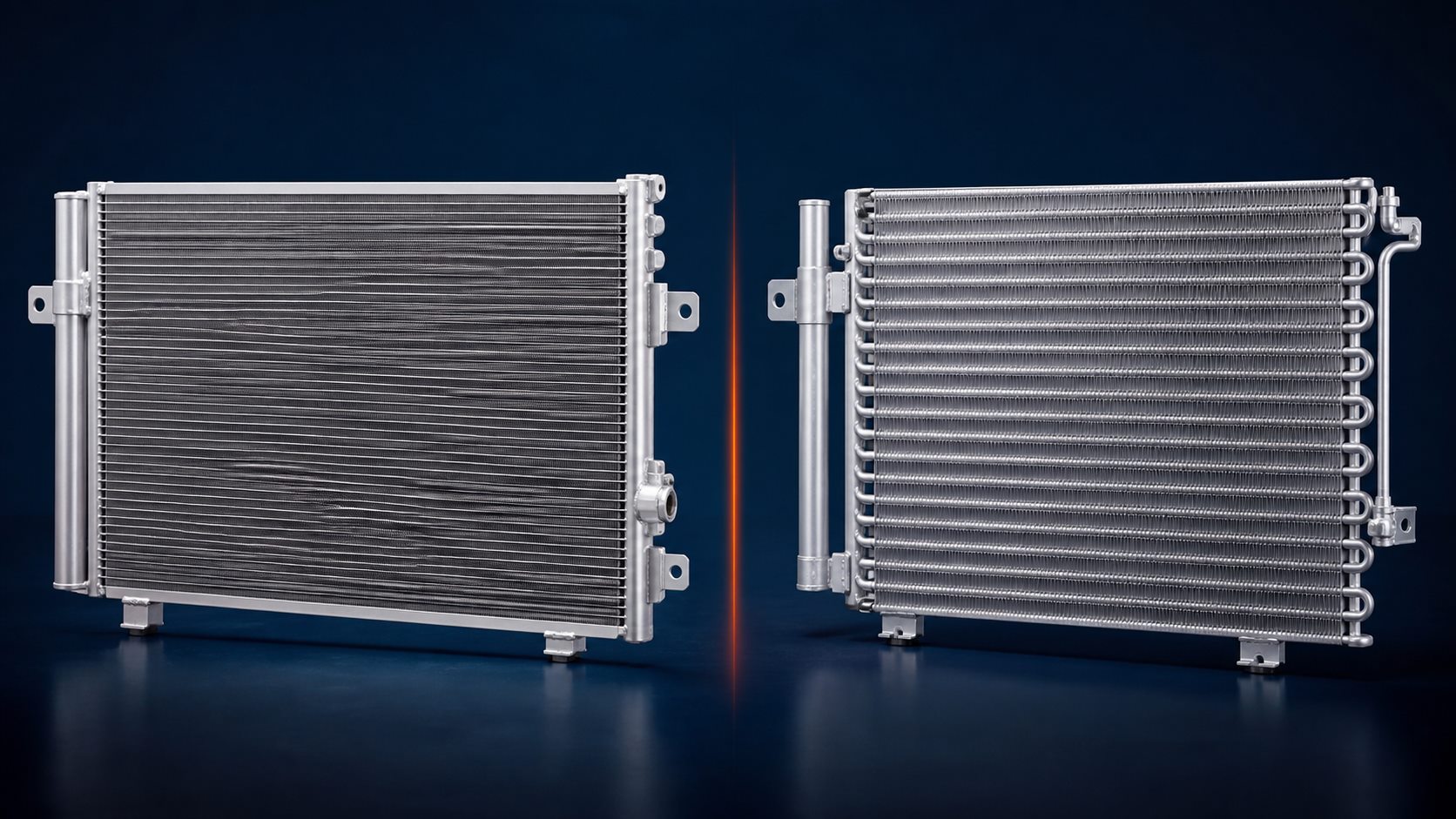
Separate an electrical fault from internal damage
Start with the workshop diagnosis. A control or electrical problem is a different finding from a seized compressor that has released particles into the circuit. Record the actual failure evidence rather than treating every loss of cooling as internal compressor damage.
Ask the repairer to document contamination found during the approved inspection procedure. Photographs of recovered debris, inspected components and the removed compressor help the parts supplier understand why an associated condenser is being requested. Refrigerant recovery and circuit work belong with trained technicians using the correct equipment.
Why a contaminated parallel-flow condenser is different
Nissens' compressor installation guidance calls for replacement of parallel-flow or multi-flow condensers when a failed compressor has left particles or other contamination in the system, because these designs cannot be thoroughly flushed. Follow the vehicle procedure and the replacement compressor supplier's installation requirements for the actual application.
The practical consequence is that a condenser can appear intact yet still be unsuitable for reuse after internal compressor failure. A successful external leak check is not evidence that contamination has been removed from its internal passages.
Plan the repair as a circuit, not a single part
The workshop should define which components are replaced, which are cleaned and how the completed circuit is verified. Nissens' flushing guide distinguishes components that must be removed or bypassed during flushing, including the compressor and expansion device, and calls for replacement of the receiver-drier or desiccant. A generic instruction to 'flush everything' is not a complete repair plan.
Before ordering, identify whether the condenser quotation includes a receiver-drier assembly, a replaceable cartridge, seals or other accessories. Record each item explicitly so the workshop does not discover missing parts after dismantling. Confirm service requirements against the vehicle documentation rather than assuming every condenser package is identical.
Build a replacement enquiry that can be checked
Send the full OE reference and vehicle application together with photographs of the connections and mounting points. Separate the old component's identification from the proposed replacement reference. If a reference has been superseded, ask for the basis of the match.
Keep the repair diagnosis separate from the commercial request: the workshop decides the repair scope; the supplier confirms the proposed part, included accessories and availability. This helps prevent a fitment enquiry from being mistaken for a remote diagnosis.
- Vehicle make, model, production period, engine and market
- Complete condenser and compressor references, with label photographs
- Workshop finding: electrical/control fault, internal damage, or still under investigation
- Contamination evidence and the required condenser construction
- Receiver-drier arrangement and an explicit list of included accessories
Does a clean-looking condenser need replacement?
External appearance alone cannot resolve internal contamination. Equally, a compressor fault without confirmed internal debris is not, by itself, proof that the condenser must be replaced. Use the failure evidence and application-specific instructions to decide. For construction background, consult our parallel-flow versus serpentine guide before preparing your parts list.