Start with demand you can explain
Collect recent enquiries from the repair shops, retailers or fleets you expect to serve. Record the vehicle make, model generation, engine, year and market alongside the part requested. Mark whether the enquiry became a sale, could not be supplied, or remains uncertain.
If you use vehicle-registration or market data, record its source, date and geographic coverage. General vehicle popularity alone does not establish demand for a specific radiator or condenser variant. This guide does not provide a verified best-seller ranking for any country.
Make one purchasing line for each confirmed variant
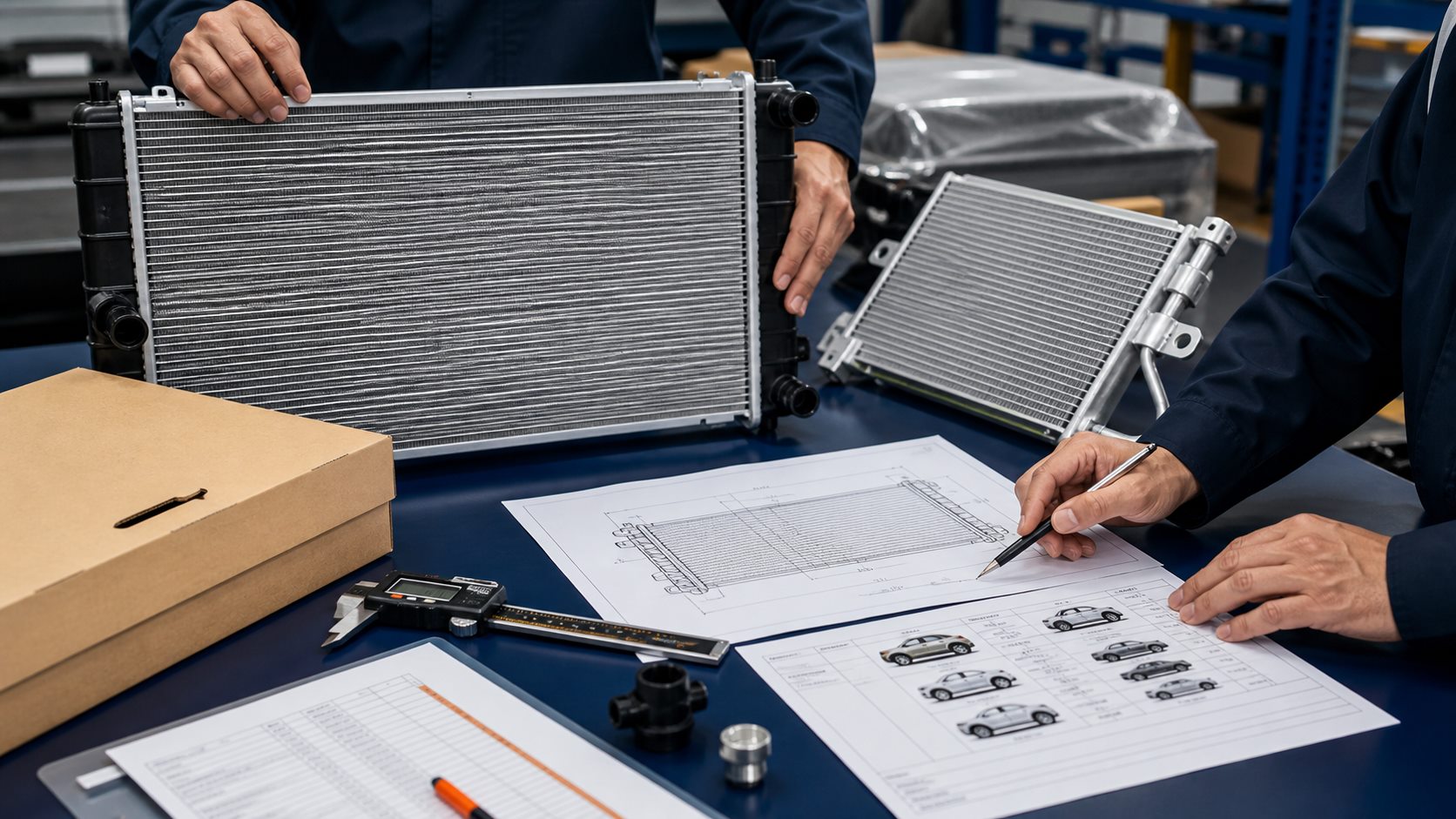
For each candidate, record the complete OE or aftermarket reference, product family, application evidence, quantity you wish to try and expected repeat demand. Keep similar-looking variants separate until dimensions and interfaces have been checked.
UIN publishes searchable references for radiators, condensers, intercoolers and heater cores. Evaporator and oil-cooler overview pages describe product families; they do not establish ready-to-order coverage for every vehicle.
Compare investment and replenishment together
Ask for a written quotation that separates unit price, sample requirements, MOQ per SKU, packaging and the proposed delivery schedule. Compare the first purchase with the likely cost and timing of a later replenishment.
Estimate how much stock you can receive, identify and store without mixing variants or damaging fins and connections. Agree labels that link your internal stock code to the confirmed supplier reference.
Use the first order to learn
Review actual sales, fitment questions, return reasons and repeat requests after the first deliveries. Expand references supported by evidence and investigate slow-moving stock before repeating the order.
Send Hongdao your initial list, target market and the open questions. Current availability and commercial feasibility are confirmed against that list; a broad catalog size is not a guarantee of demand or stock.