Define the test plan
The plan identifies product revision, sealed ports, test medium, pressure, stabilization time, duration, acceptance criterion, equipment, calibration, sampling, and records. Conditions should not be copied from an unrelated part without engineering review.
Fixtures must connect without damaging the part or hiding a leak, and operators need a safe pressurization and depressurization method.
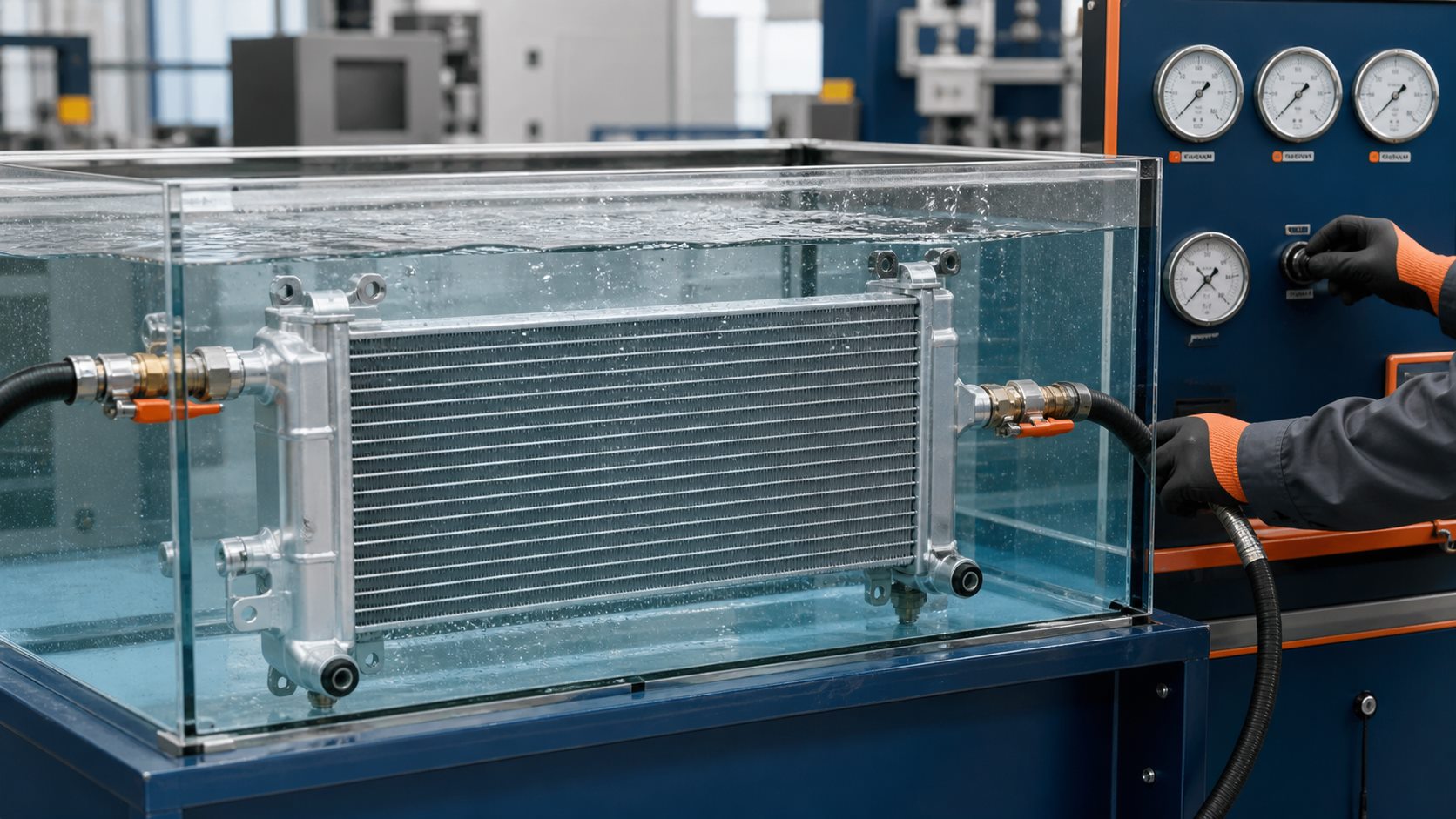
Water-bath testing
A sealed component is pressurized with an approved gas and submerged. Escaping gas can produce a visible bubble stream at the leak location. Trapped air, surface bubbles, temperature, observation time, and technique affect interpretation.
The part must be dried and protected afterward. Visible bubble size should not be converted into a leak rate without a validated correlation.
Pressure-decay and flow methods
A pressure-decay system measures change after filling and stabilization. Differential systems compare a test volume, while flow methods may measure gas needed to maintain a condition. Temperature, internal volume, fixtures, and instrument resolution influence results.
Automated stations can retain traceable pass/fail records. Calibration checks, master parts, maintenance, and challenge tests help verify detection capability.
Tracer gas and investigation
Tracer-gas methods can provide higher sensitivity when justified by the product requirement. The method, background control, safety, and acceptance rate need qualified procedures.
Leak testing does not confirm dimensions, flow performance, cleanliness, or fitment. Field-return analysis may also require visual inspection, installation evidence, production records, and material review.