Impact and handling damage
The condenser is normally near the front of the vehicle, where stones, collision loads, tools, or incorrect handling can damage tubes and fins. A concentrated dent or puncture may indicate an external event, but fin deformation alone does not prove that a refrigerant passage is leaking.
Packaging damage can affect connections or brackets before installation. Photograph the carton, protection, labels, and part condition when transit damage is suspected.
Corrosion and exposure
Moisture, road salt, chemical cleaners, dirt retention, and dissimilar-metal contact can contribute to corrosion. Pattern, depth, location, climate, and service history help distinguish surface oxidation from perforation.
Connections, joints and vibration
Leakage can occur at fittings, manifold joints, tube-to-header joints, receiver-drier connections, plugs, or sensor ports. Damaged seals, contamination, misalignment, excessive tightening, or unsupported pipes can create stress.
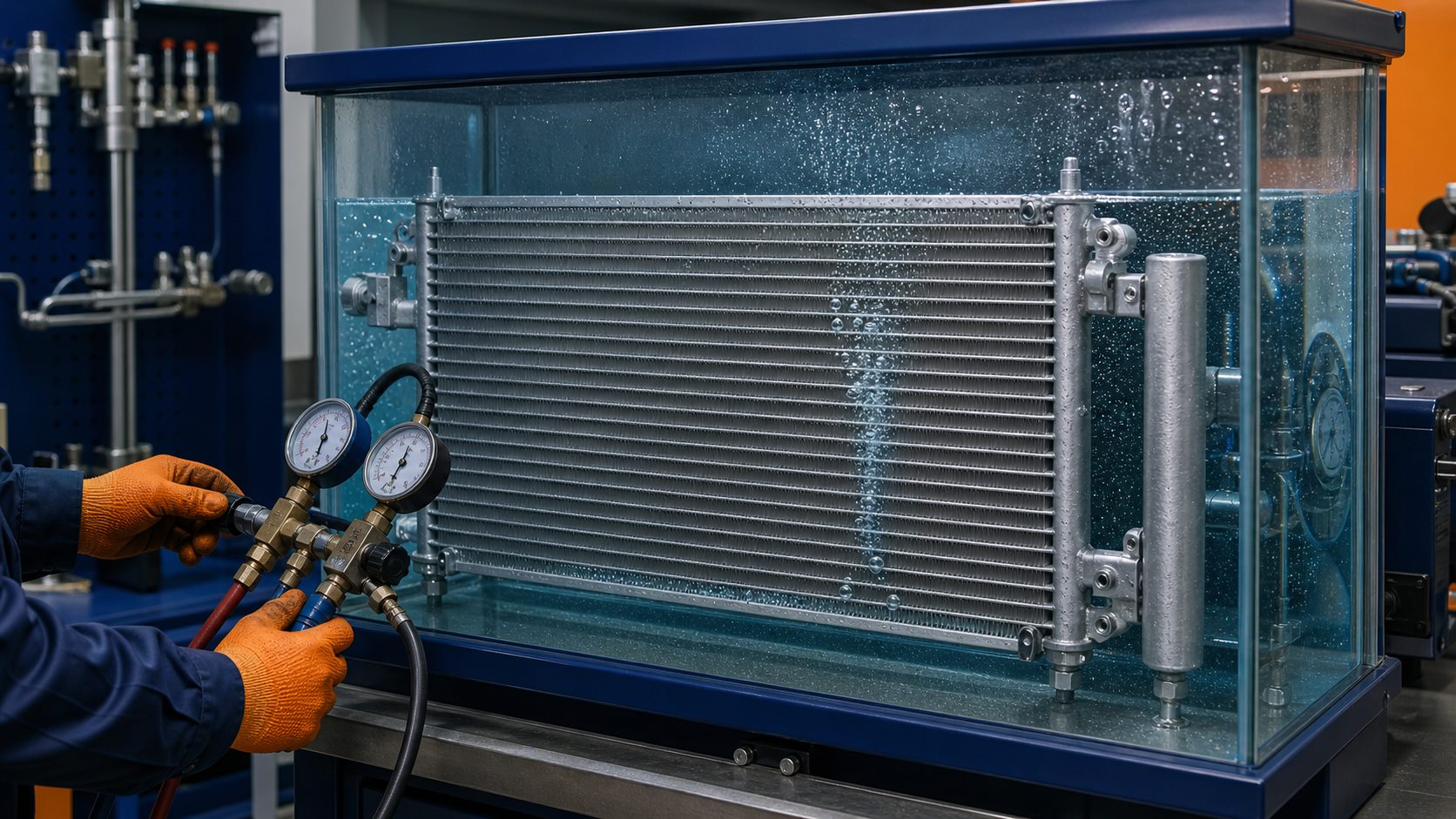
Testing should identify whether the leak is in the component material, a brazed joint, a removable seal, or the connected vehicle pipework.
Collect evidence before deciding cause
Record the order reference, part and batch number, vehicle, installation date, service information, leak location, test method, photos, and video. Protect and return the part if laboratory review is needed.
Responsibility and corrective action should follow the evidence. Root cause may require production records, sectioning, material review, and installation information in addition to leak localization.