Define the exact engine application
Provide the complete OE and alternate references, vehicle make, model, chassis, engine code, power variant where relevant, turbo system, production period, and market. A body model can use different charge-air coolers across engine outputs or production changes.
Identify front-mount, side-mount, air-to-air, or liquid-cooled configuration when known. The website product group does not imply that every construction is available; the RFQ must be confirmed against current capability.
Inspect core, tanks and connections
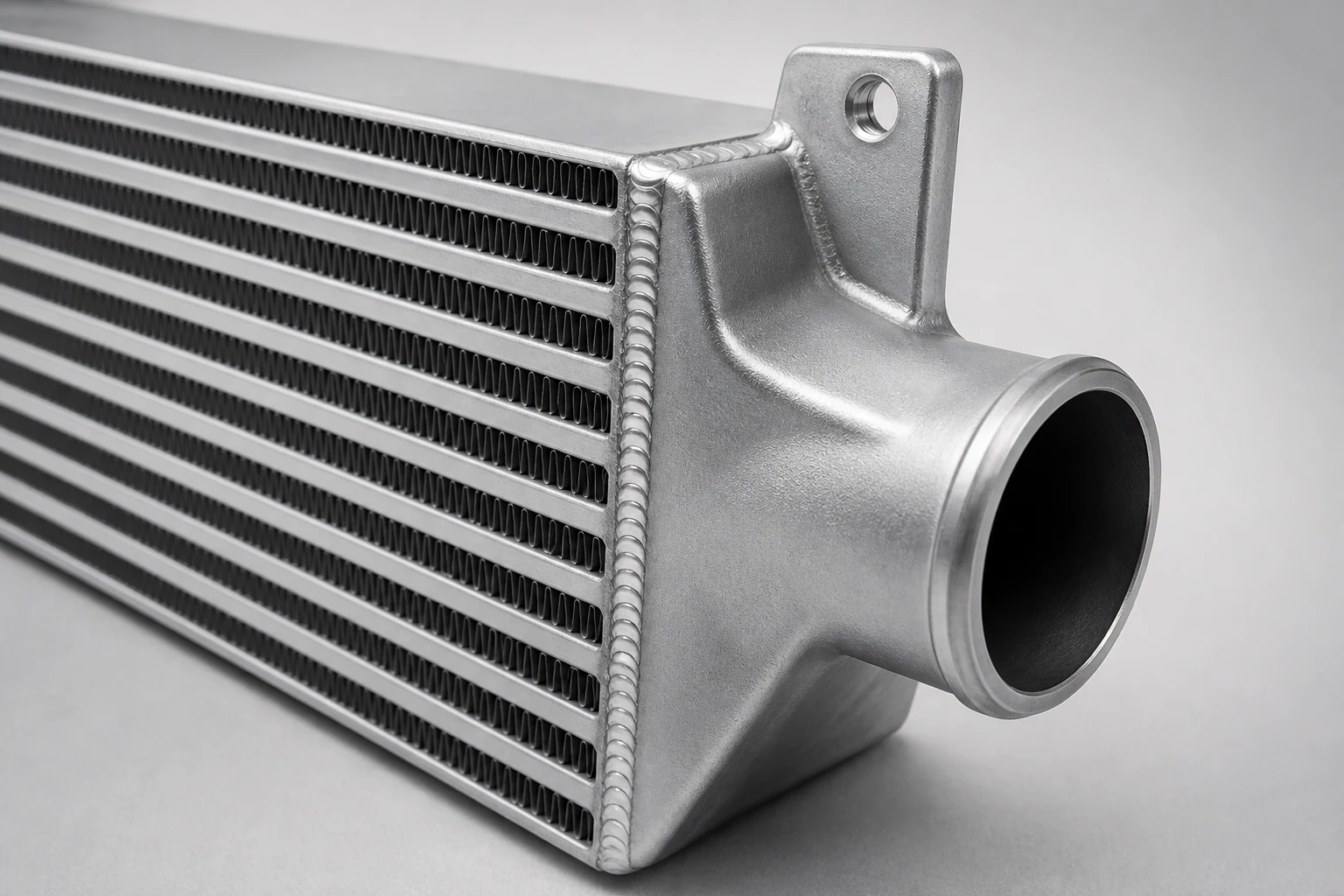
Record core width, height and thickness; complete dimensions; end-tank material and shape; inlet and outlet outer diameter; bead or coupling form; connection angle; mounting brackets; locating features; and sensor ports.
Compare clear photographs from both faces and each connection. Small changes in outlet rotation, bracket position, or tank clearance can prevent installation even if the core dimensions match.
Agree containment and cleanliness controls
The test plan should define the applicable medium, pressure, stabilization, duration, fixture, and acceptance rule for the specific design. Any pressure or performance value must come from the approved requirement rather than a generic website claim.
Internal debris, moisture, damaged caps, and shipping contamination can affect the charge-air system. Confirm cleaning, drying, port protection, visual inspection, and packing requirements.
Approve revisions before volume supply
Use a controlled drawing, dimensional report, first article, or physical sample when the reference history is incomplete. Link the approved definition to materials, tooling, joining, leak testing, dimensions, labels, and packaging.
If a tank, bracket, connection, core, supplier, or process changes, review the effect on fitment and the agreed tests before treating the revision as interchangeable.