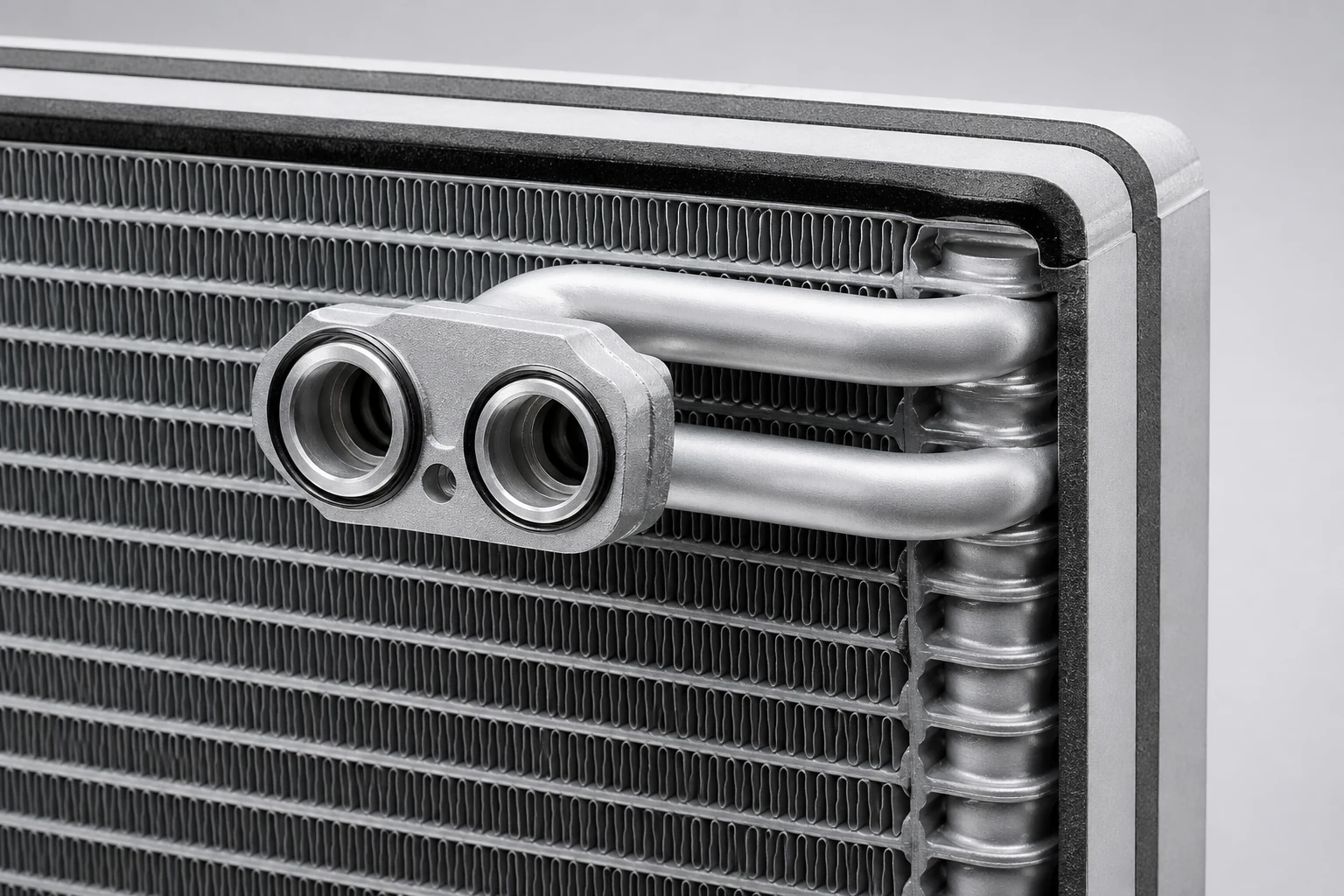
Match the OE and HVAC system
Record the full OE number, vehicle make, model, chassis, engine, production period, market, and HVAC configuration where known. Photograph the original label and connection area if the removed part is available.
A vehicle model may use more than one evaporator across suppliers or production changes. Treat alternate references as search evidence until the installation interfaces are confirmed.
Confirm the physical interfaces
Measure finned-core width, height and thickness, complete assembly dimensions, side plates, locating features, pipe or block position, port spacing, port diameter, and connection orientation.
Confirm the expansion-valve interface, sealing surfaces, O-ring seats, sensor or temperature-probe provisions, and whether any valve, foam, pipe, bracket, or seal is included. State these items explicitly in the RFQ.
Control cleanliness and handling
Refrigerant passages must be protected from moisture, particles, and handling damage. Port caps, drying, controlled storage, clean assembly, and suitable unit packaging should be defined for the product and shipping route.
Bent fins, damaged sealing surfaces, or distorted pipes can affect installation and operation even when a leak test passes, so visual and dimensional inspection remain separate controls.
Define leak and functional checks
The leak-test method and acceptance criterion depend on the design and customer requirement. The controlled plan should identify test medium, pressure, stabilization, duration, equipment, fixtures, calibration, and result traceability.
Containment testing does not prove airflow, refrigerant distribution, drainage, fitment, or thermal performance. Agree any additional validation and first-article evidence before production approval.