Identify the HVAC application
Provide the complete OE number, vehicle make, model, chassis, engine, production period, and market. Note left-hand-drive or right-hand-drive configuration when it changes the HVAC unit or pipe routing.
Keep supplier references and supersessions as cross-references, but record which identifier came from the original part, vehicle catalog, or aftermarket source.
Measure what fits inside the case
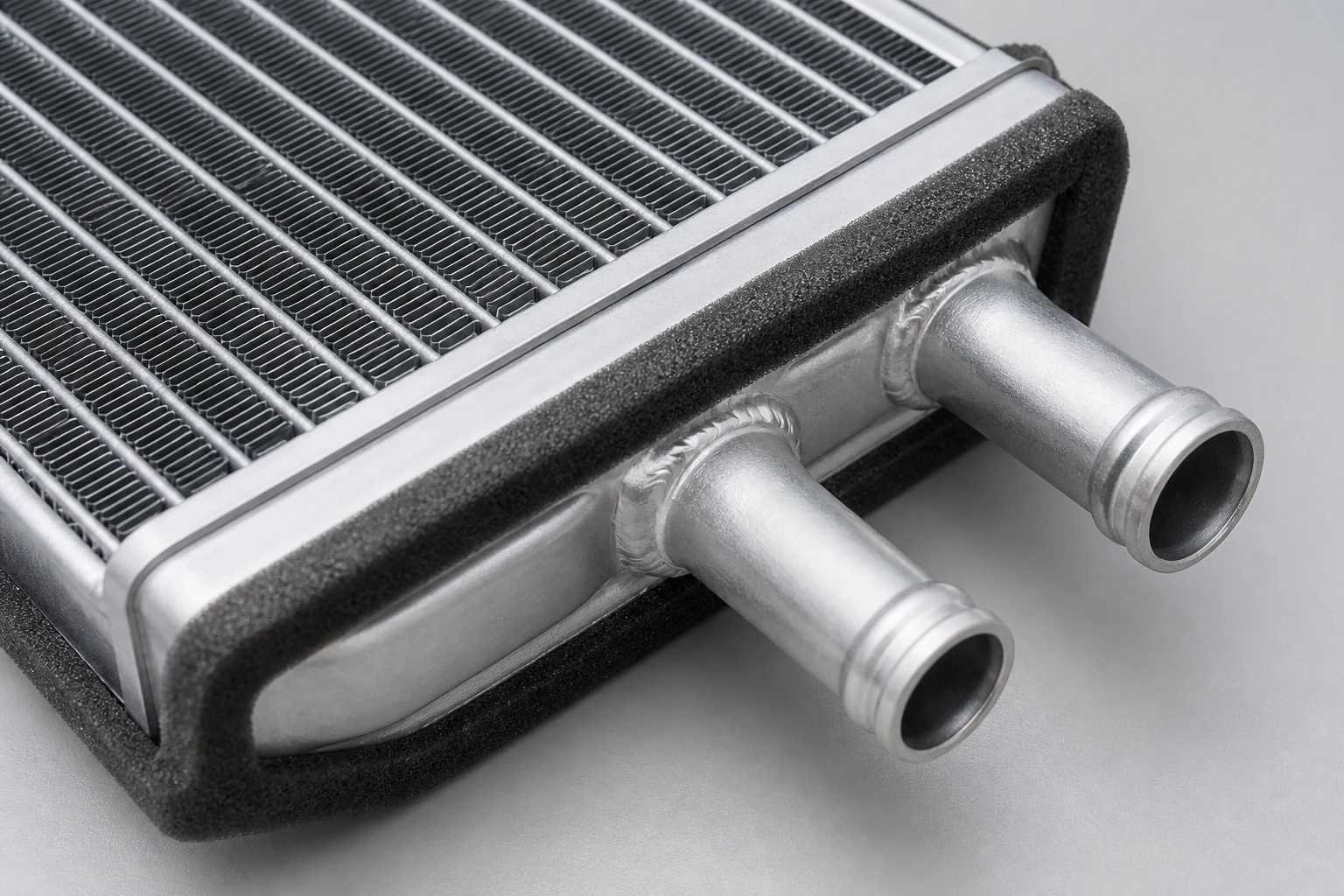
Record finned-core width, height and thickness separately from the complete assembly. Confirm header shape, side plates, locating tabs, pipe spacing, pipe length, bend direction, connection diameter, and sealing interface.
Foam position and thickness can affect air bypass, noise, and retention inside the case. Confirm whether foam, O-rings, clips, or pipes must be included rather than assuming they are part of every supply configuration.
Review materials, joints and cleanliness
The part definition should identify the approved construction and connection method. Incoming material checks, forming and assembly controls, brazing or joint controls, dimensional inspection, and visual inspection must match the product design.
Internal cleanliness matters because debris can enter the vehicle cooling circuit. Cleanliness requirements, flushing, drying, port protection, and packaging should be agreed for the specific program.
Confirm the test and approval route
A leak-test plan defines the medium, pressure, stabilization, duration, fixture, and acceptance rule for the actual heater core. Conditions should not be copied from a different product without engineering review.
For a new or uncertain application, approve a drawing, dimensional report, first article, or physical sample. Keep the approved revision and evidence with the order record.